🔢 Activities for Number & Counting Poems
Have students or your child make up their own verses using the pattern of the poem.
One, two, my toys are new.Three, four, I put them by the door.
Five, six, I play with sticks…
Go on a number hunt around the classroom or home.
Can you find three books?Can you find 5 crayons?
Give each child a set of 5 index cards with the numbers and/or number words on them. As you read the poem, they hold up the correct number or word that matches the number in that line.
Use the pictures below or draw your own pictures of five scarecrows. Have students or your child point to the correct picture that matches the line you read. You can also have a sheet with the poem written out and have them illustrate each line.
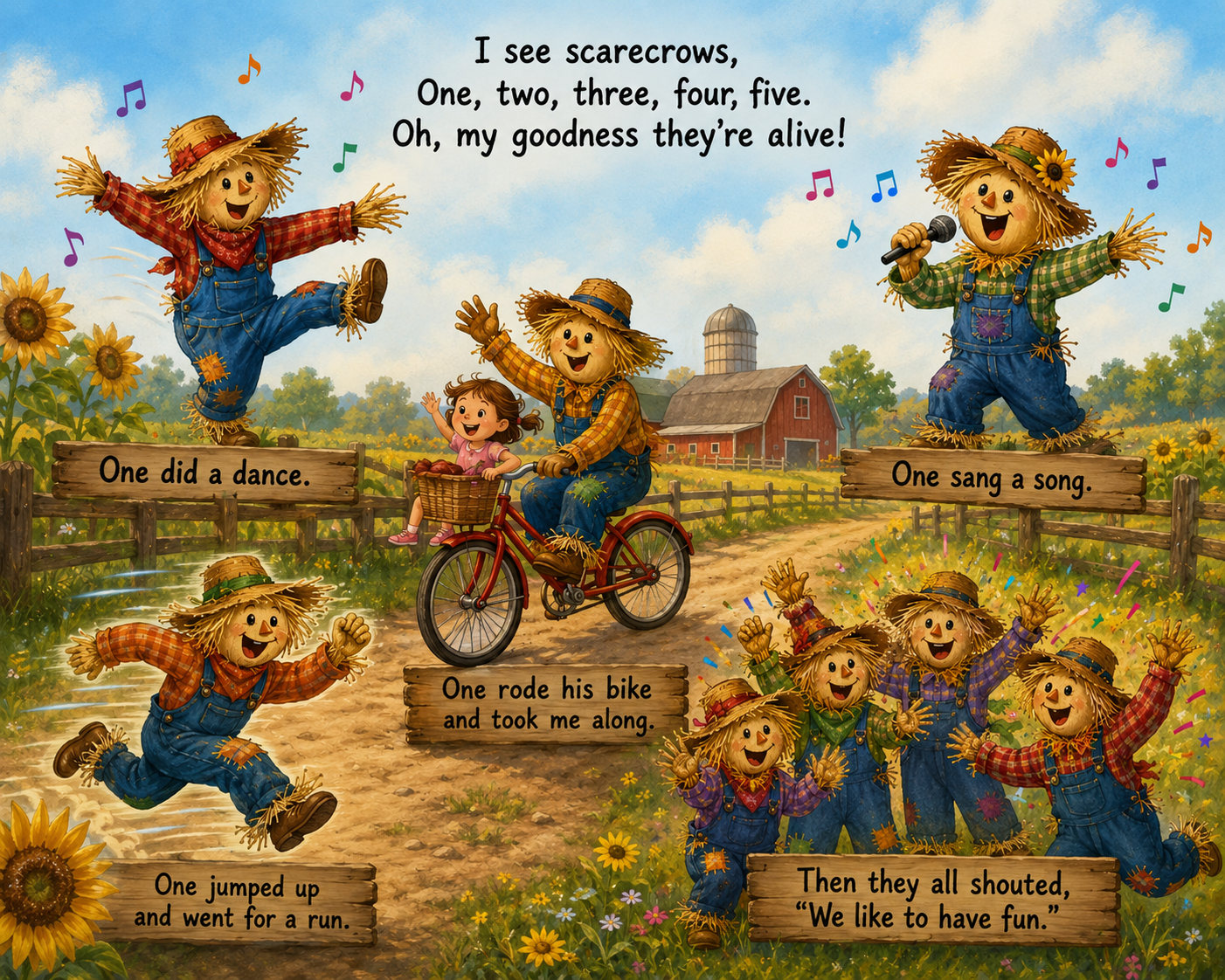
Write the lines of the poem on strips of paper (or on one sheet in the incorrect order). Have students or your child put them in the correct order from first to last.
Use the pictures below, or any 5 small objects as manipulatives. Have students or your child take one away as you read each line that subtracts a monster. Use this strategy for other numbers greater than 5.
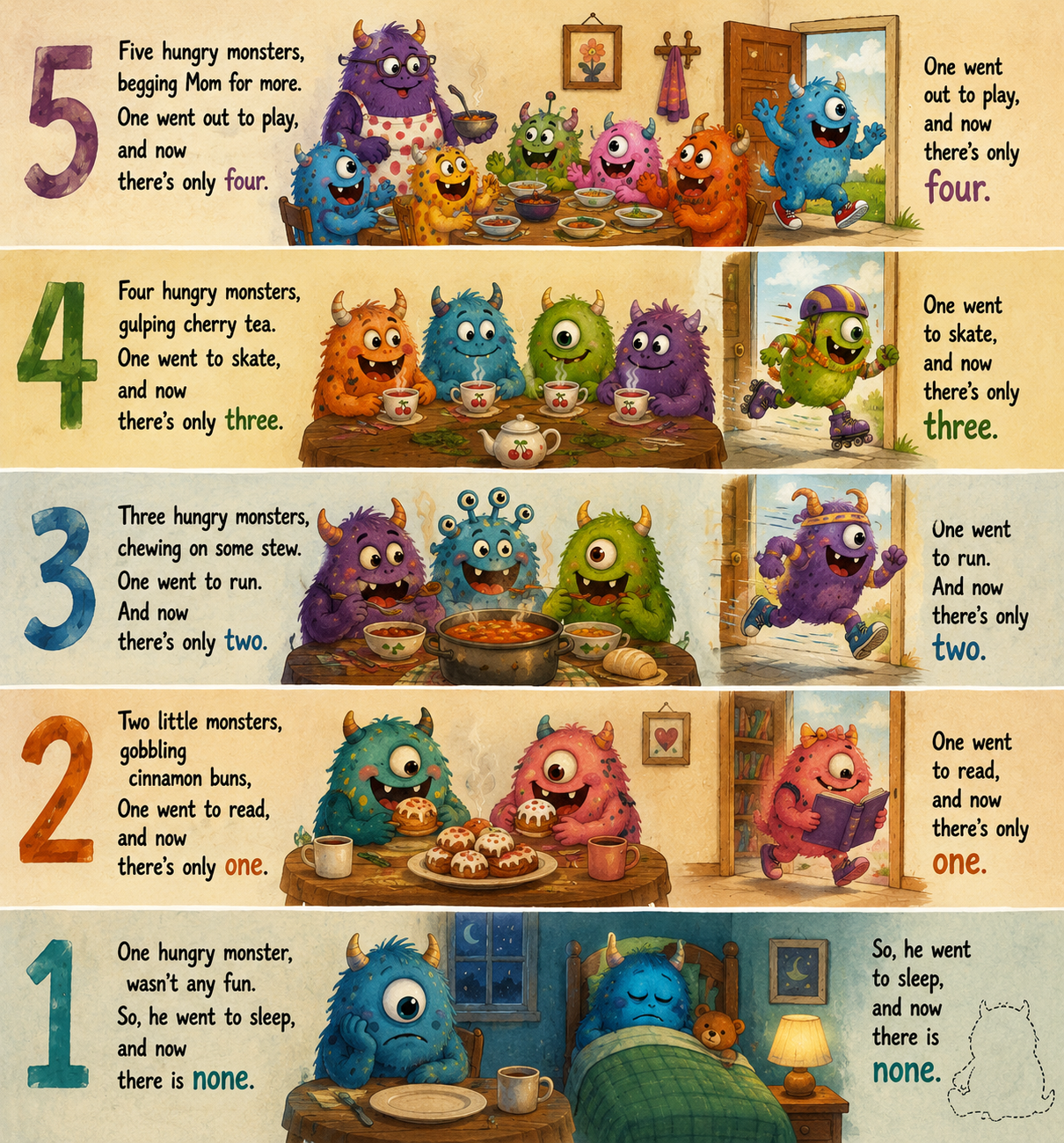
Read the poem together, then ask students or your child to find the words that mean the same thing.
Ten pennies and a dimeCan they point to the number words? Can they point to the money words? Ask them to show you different ways to make a specific amount.
Two dimes and a nickel for a quarter — or 25 penniesSet up a center with a cash register and items with price tags. One person is the customer, the other is the clerk. The customer uses play money to buy an item; the clerk checks that the amount is correct. For older children, they can learn to make change. Take turns being the customer and the clerk.
Read the poem. Then give each student or your child 50 pieces of "Cookie Crisp" cereal or another small cereal. Have them put the pieces in sets of two.
Read the poem again and have them count their pieces by twos. Read it a third time and have them eat their pieces by twos!
Optional: Fill a large bowl or wide-mouth jar with small objects and have each student grab a handful. Have them count by twos how many they grabbed. Make a graph using the amounts from each child — then discuss who had the most and who had the least. Or have students estimate how many pieces are in the bowl, then dump it out and count by twos together to see how close they came.
Have students or your child create a shopping list of foods they would like to buy.
Have them illustrate a container (box, can, tub, or bottle) for a food they like, then write a description that would persuade someone to buy it.
Have them create a sign for one of the aisles in a grocery store — include at least 5 items you would find in that aisle.
Ask students or your child to think of other places they see math and reading together in their world.
Road signs · Menus · Tickets · License plates · ScoreboardsMake a bulletin board or class book of all their ideas!